Excess stock marketplace map: who serves buyers in the Middle East
Branded excess stock changes hands online on private platforms, auction sites, open directories, a few Gulf-based marketplaces and classifieds. Here is what each excess stock marketplace says on its own pages about who it is built for, which regions it names, how money moves and how buyers are checked, followed by what is still missing for buyers in the Gulf, Iraq and the Levant.
An excess stock marketplace is a website where brands, retailers and wholesalers sell surplus goods in bulk to business buyers. As of November 2026 they fall into five kinds: private vetted platforms such as Ghost and Unfrosen, auctions such as B-Stock and Stocklear, open directories such as Merkandi, Gulf-based platforms such as Buystocklot, and classifieds. Of the eleven platforms we compared, three offer an Arabic version.
What is an excess stock marketplace?
An excess stock marketplace is a website where companies holding surplus goods (overproduction, cancelled orders, last season's lines, sometimes customer returns) sell them in bulk to business buyers rather than to consumers. The platforms differ less in what they sell than in three design choices: who may join, who sees whom, and whether the money passes through the platform. Five kinds cover what we found:
- Private vetted marketplaces. Buyers and sellers apply, and the platform keeps their names hidden: Ghost, Highstock, Unfrosen.
- Liquidation auctions. Lots, often pallets, go to the highest bidder: B-Stock, Stocklear.
- Open listing directories. Sellers post offers anyone can browse; contact details sit behind registration or a subscription: Merkandi, Stocklots24, TradeKey.
- Regional B2B marketplaces based in the Gulf. Buystocklot, Tradeling, Surplus Market.
- Classifieds. General small-ads sites where traders post lots and want-to-buy notices, such as Haraj in Saudi Arabia.
General sourcing sites such as Alibaba.com sit outside this map, because they are built around products made to order; we explain why Alibaba does not fit branded excess stock in a separate guide.
A word on where we stand. Straiit is building a marketplace in this space, and has itself listed a supplier's stock on one of the platforms below. That is why every platform fact in this map comes from the platform's own pages, read on 22 November 2026 and linked, with "not stated" wherever a page is silent. Nothing here is a ranking.
Which marketplaces keep buyers and sellers private?
Ghost, Highstock and Unfrosen are private marketplaces: buyers and sellers apply, are checked, and do not see each other's names. As of November 2026, their own pages describe them as follows.
Ghost calls itself an AI-native distribution platform for brands. Its home page lists more than 28,000 brands and over $12 billion of total MSRP (manufacturer's suggested retail price) on the platform. Sellers control "which distribution channels, retailers, and geographies" their inventory is sold in. The platform is "only accessible to approved members", and Ghost states: "we'll never publish who buys and sells on Ghost". It says it has a presence across six continents but names no country, and how payment works is not stated on its site.
Highstock describes itself on its home page as "the private AI native marketplace for vetted global business buyers and coveted brands", with more than 100 brands, more than 100 wholesale buyers and over $1 billion of listed inventory. Buyers apply and "get access in as little as 24 hours". Its page for buyers lists free samples, offers, fulfilment, customs and regulatory support, and invoices paid "with flexible payment terms". Its offices are in New York and Gurgaon, the three testimonials on its buyers page come from a retailer in Canada, a retailer in Mexico and a distributor in the US (its home page shows none), and the brands it describes are mostly in beauty and personal care.
Unfrosen sells excess fashion stock to boutiques and resellers. Its page for sellers says it is connected to over 5,000 verified B2B buyers, charges no listing or setup fees and works on "a commission-based model, which is always paid by the buyer". Sellers are paid upfront by Unfrosen, can keep their brand fully anonymous, and do not receive buyer contact details, because "Unfrosen handles all communication". Its page for buyers says every account is manually verified, payment is due when the order is placed, by bank transfer or card, and "Currently, we serve retailers within the European Union."
Privacy protects the seller's brand and its full-price channels, which is why brands use these platforms. The trade-off is that the platform, not the seller, decides who the buyers are and talks to them.
Where can buyers see sellers and bid or contact them?
Auction sites and open directories take the opposite approach: sellers are visible, and buyers either bid on lots or contact sellers directly. As of November 2026, this is what five of them state.
Stocklear, a French B2B marketplace, runs online auctions of customer returns, overstock and damaged goods. Its home page claims more than 12,500 qualified professional buyers and names Boulanger, Carrefour and Fnac Darty among its sellers. Its page for sellers gives a different figure, "nearly 9,000 registered professional buyers", and says only certified professional accounts with a French company register extract (Kbis) less than a year old can see offers and bid. The seller approves the highest bidder, can restrict a sale's visibility by country, and is paid once the buyer has confirmed that the order matches; the buyer collects the goods from the seller's premises at its own cost.
B-Stock lets resellers "find and bid on auctions from 50+ marketplaces" of returned, overstock and liquidation inventory, according to its blog. Its marketplaces carry the names of the retailers behind them, such as Target, Walmart and Amazon, and its auction pages can be filtered by region: United States, Canada, Europe, Asia and UK. Buyers pay by ACH bank debit through Stripe, by wire or, if they qualify, on 30-day terms, according to its payment FAQ, and all potential US buyers must submit a resale certificate.
Merkandi, run by Merkandi Ltd in the UK, is an international wholesale platform for overstock, clearance and liquidation stock and customer returns. Its page for sellers says a seller pays an annual subscription and passes a verification by Merkandi's staff, then appears with full contact details. Offers are visible to everyone, but a seller's contact details only to registered users, and Merkandi "does not charge commission on sales". Buyers contact sellers directly, and each seller's profile lists the payment methods it accepts. Its business packages cost EUR 329, 549 or 869 plus VAT for 12 months. It claims users from 150 countries and 34 language versions on its page for sellers (its home page says 33), Turkish among them and none in Arabic.
Stocklots24 says on its home page that it operates 15 B2B trade platforms in 11 languages, including a Turkish portal, with offers ranging from remaining stock and special items to returns. Registration takes two minutes and accounts are "activated immediately"; a Requests section carries buyers' wanted notices. How payment between traders works is not stated on its home page.
TradeKey is a general B2B trade portal whose importer pages list buy offers by country and product, readable without logging in. Its page of garments stock lot buyers in Egypt, for example, showed five buy offers, four of them with the buyer's city. The site is available in Arabic, Turkish and five other languages and sells paid memberships; how payment between traders works is not stated on the page.
On an open directory, checking the other side is your job, not the platform's. Before paying anyone you meet this way, read how to verify a supplier you found online.
Which platforms are based in the Middle East?
Three platforms on this map are based in the Gulf or publish Gulf country pages: Buystocklot, Tradeling and Surplus Market. As of November 2026, their pages say the following.
Buystocklot is based in the United Arab Emirates, according to its about page, and its terms of service name the operator as Buystocklot FZC, a free zone company in the Sharjah Airport International Free Zone. Sellers complete a company verification, a review of the trade licence or company registration, before they publish stock, according to its trust and safety page, and buyers can open supplier profiles. Buyers sign in for free to contact suppliers, make an offer or post a sourcing request, which suppliers answer with a quotation. Its how it works page tells sellers to "agree payment, inspection and delivery directly with your buyer", and its terms state: "We do not hold, process, escrow, guarantee or insure any payment between Users". Its pricing page lists "No listing fees or marketplace commission" and one optional plan, Buystocklot Plus, at $99 a year; a managed service called Direct is paid for by a fee that the partner selling the stock pays on completed sales, according to its FAQ. Its buyer protection page says: "We are developing independent inspection support for wholesale buyers", and that the planned service cannot be booked yet. The site has an Arabic version.
Tradeling went live in April 2020 as a B2B e-marketplace for the Middle East and North Africa, growing out of a Dubai Airport Freezone Authority project, as the Dubai Media Office reported at the time. Its home page offers business essentials across MENA, from electronics and food to fashion and accessories, with credit terms of up to 60 days, a pay-in-30-days option, instalments through Tamara, and requests for quotation answered by verified suppliers. It is a general wholesale marketplace rather than one built for excess stock, and its site has an Arabic version.
Surplus Market is a B2B marketplace for surplus inventory and liquidation stock, with pages for the UAE, Qatar, Saudi Arabia and India. Its UAE page mentions branded apparel, and apparel, footwear and accessories is one of the eight categories it lists, but most of the others are industrial, from machinery and electrical equipment to construction hardware and oil and gas. It states: "Buyer and seller identities are never disclosed on the platform." It describes its buyers and sellers as verified; how they are checked, and how payment works, is not stated on that page.
Classifieds carry part of the regional trade as well. Haraj is a Saudi classifieds site in Arabic, with sections from cars to fashion. In our buyer research in September 2026, Haraj carried want-to-buy posts from traders looking for stock.
How do they compare on regions, payment and buyer checks?
The table sets the eleven platforms side by side in alphabetical order; the order is not a ranking. Every cell comes from the platform's own pages, linked above, as of November 2026. "Not stated" means the pages we read do not say.
| Platform | Built for | Regions named on its site | Who sees whom | How money moves | Checks |
|---|---|---|---|---|---|
| B-Stock | Resellers bidding on returned, overstock and liquidation lots | Auctions filterable by United States, Canada, Europe, Asia and UK | Marketplaces carry the retailer's name | Buyer pays B-Stock: ACH through Stripe, wire, or 30-day terms if qualified | Buyer application; resale certificate for US buyers |
| Buystocklot | Stocklots, surplus and closeout inventory, with sourcing requests | Based in the UAE; no list of countries on the pages we read | Supplier profiles open to buyers | Directly between buyer and seller; no listing fee or marketplace commission; optional plan at $99 a year | Company verification of every seller; buyers sign in to contact suppliers |
| Ghost | Brands and retailers trading wholesale and surplus inventory | "A presence across six continents"; no country named | Approved members only; names never published | Not stated | Approved members only; suppliers individually vetted |
| Highstock | Brands with unsold inventory and vetted business buyers | Offices in New York and Gurgaon; three testimonials on its buyers page, from Canada, Mexico and the US | Sellers "operate in total privacy" | Invoices with "flexible payment terms" | Application; access in as little as 24 hours |
| Merkandi | Wholesalers, importers and exporters; overstock, liquidation stock, returns | Users from 150 countries; 34 language versions (33 on its home page) | Offers public; seller contacts for registered users | Each seller lists its payment methods; no commission; packages of EUR 329 to 869 plus VAT a year | Staff verification of sellers |
| Stocklear | Brands and retailers auctioning returns, overstock and damaged goods | French site with European, Spanish, Dutch, German and English versions | Sellers named; the seller approves the winning bidder | Seller paid once the buyer confirms the order matches; buyer collects | Buyers show a Kbis less than a year old |
| Stocklots24 | Traders in remaining stock, special items and returns | 15 platforms in 11 languages, including Turkish | Offers and buyer requests public | Not stated between traders | Account activated on registration |
| Surplus Market | Surplus and liquidation stock, mostly industrial categories | UAE, Qatar, Saudi Arabia, India | "Buyer and seller identities are never disclosed" | Not stated | Described as verified; method not stated |
| TradeKey | General B2B portal for importers and exporters | Buy offers by country, worldwide | Buy offers public, often with the buyer's city | Not stated | Not stated |
| Tradeling | Business essentials across MENA, not specific to excess stock | MENA; UAE storefront | Brand stores; verified suppliers answer RFQs | Credit up to 60 days, pay in 30 days, Tamara instalments | Suppliers described as verified |
| Unfrosen | Excess fashion stock for boutiques and resellers | Retailers within the EU | Seller can stay fully anonymous; Unfrosen handles all contact | Buyer pays at order by transfer or card; commission paid by the buyer; seller paid upfront | Every buyer account manually verified |
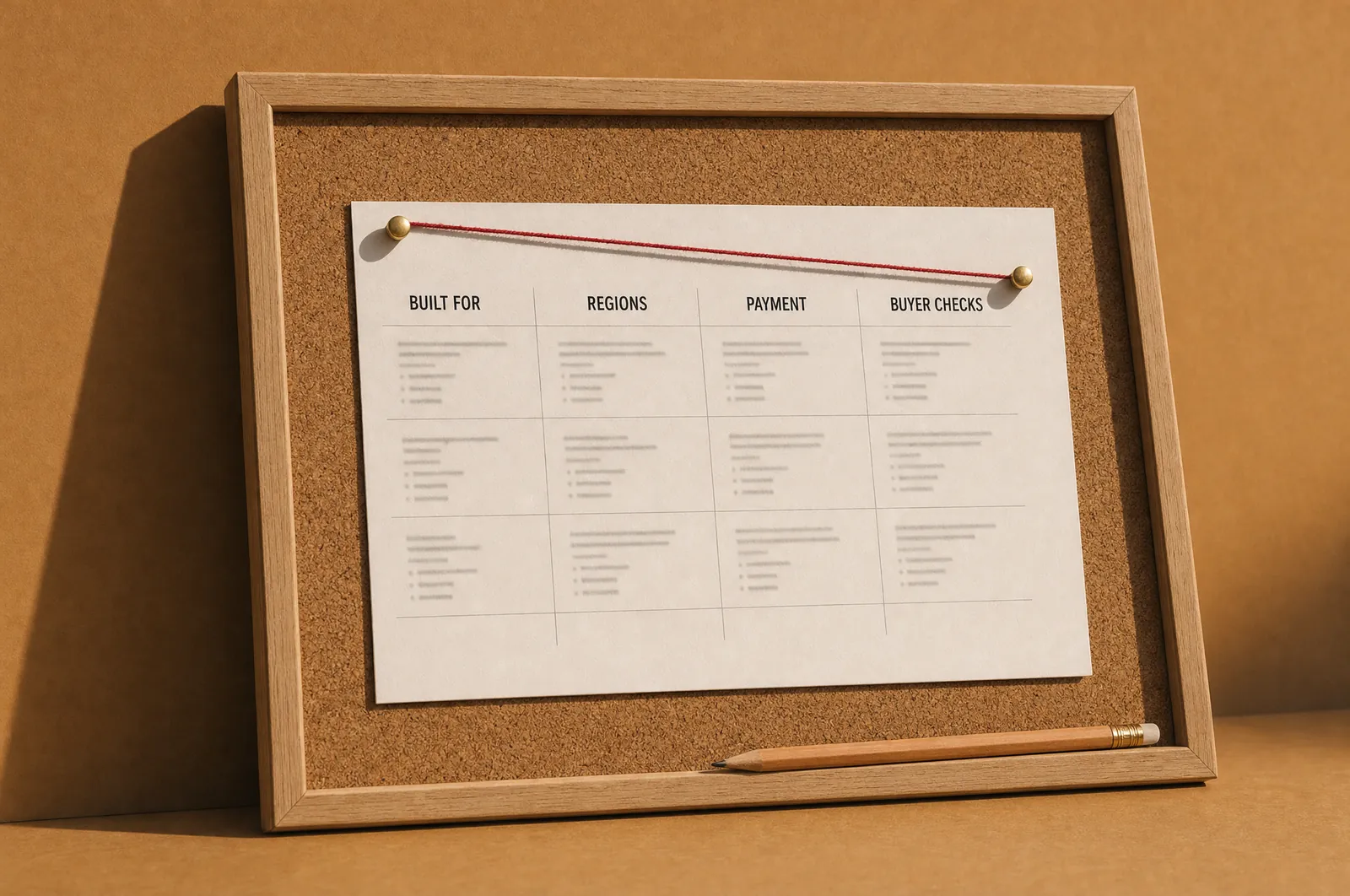
Read across the columns, three patterns stand out. Four platforms keep identities private (Ghost, Highstock, Surplus Market, Unfrosen), while the directories, the auctions and Buystocklot show the seller. On money, B-Stock and Unfrosen take the buyer's payment themselves, on Stocklear the seller is paid only once the buyer has confirmed the order, and Buystocklot leaves payment to buyer and seller. And checks fall mostly on sellers; on the buyer side they range from a French company register extract at Stocklear to manual verification at Unfrosen.
What is missing for buyers in the Gulf, Iraq and the Levant?
What buyers in the Gulf, Iraq and the Levant lack is platforms built around them, in their language, with the payment protected. Of the eleven in the table, three are based in the Gulf or publish Gulf country pages. Buystocklot is built for stock lots and based in the UAE; Surplus Market covers surplus too, but most of its categories are industrial; Tradeling is a general wholesale marketplace. The large private platforms point elsewhere. Unfrosen serves retailers within the EU, B-Stock filters its auctions by United States, Canada, Europe, Asia and UK, and the testimonials on Highstock's buyers page come from North America.

Language is a second gap. As of November 2026, three of the eleven platforms offer an Arabic version (Buystocklot, Tradeling and TradeKey) and three a Turkish one (Merkandi, Stocklots24 and TradeKey).
Protection of the payment is the third. On Stocklear the seller is paid only once the buyer has confirmed the order matches, and Unfrosen takes the buyer's payment at order and pays the seller upfront itself. None of the pages we read describes escrow held by a regulated provider, or an independent inspection before the seller is paid; Buystocklot states that it does not hold or escrow payments, and its planned inspection service cannot be booked yet. Escrow means a neutral third party holds the buyer's money and releases it to the seller only when agreed conditions are met, and we explain escrow in cross-border stock deals step by step.
Our own research and deals point the same way. When we reviewed 33 platforms in September 2026, only five showed any evidence on their own sites of buyers in the Middle East, Turkey or North Africa. In our deals between sellers in Europe and the UK and buyers in Iraq, the buyers came through personal networks and WhatsApp, not through platforms. A new buyer would pay only a deposit while the supplier wanted everything upfront, so the compromise was a deposit, then the balance against the bill of lading and a third-party inspection certificate, with the goods held at destination until the money had cleared. No escrow has been used in our deals so far.
Where Straiit fits
Straiit is a marketplace for branded excess stock built for the Middle East, and it sits outside the table above because it is our own. Sellers in the UK and Europe list overstock, and verified buyers in the Gulf, Iraq, the Levant and Turkey buy it. We verify both sides, take the buyer's payment upfront or into escrow held by a regulated provider, and keep the paperwork moving; every deal is inspected by a third party before the goods ship (the buyer pays for the inspection, Straiit arranges it). The categories on our site run from sportswear, sneakers and outdoor to padel, premium fashion, eyewear and skincare. There are no listing fees, and Straiit's fee is shown once an account is verified.
Straiit is not open yet: buyers and sellers register at straiit.com, and matching offers go out on WhatsApp. If you buy branded stock in the Gulf, Iraq, the Levant or Turkey, join as a buyer and tell us what you need.
Questions we hear
Is there a marketplace for excess stock in the Middle East?
Yes, a few. As of November 2026, Buystocklot is based in the UAE and built for stock lots, Tradeling is a Dubai-based general B2B wholesale marketplace, and Surplus Market has UAE, Qatar and Saudi Arabia pages with mostly industrial categories. Straiit is building a marketplace for branded excess stock for the region and is not open yet.
Do excess stock marketplaces show who the buyer is?
It depends on the design. Private platforms such as Ghost, Unfrosen and Surplus Market do not disclose identities, while open directories such as Merkandi show the seller's contact details to registered users, and TradeKey publishes buy offers, often with the buyer's city.
Do I pay a commission to sell on an excess stock marketplace?
Not always. As of November 2026, Merkandi charges an annual package and no sales commission, Buystocklot charges no listing fee or commission on its marketplace and sells an optional plan at $99 a year, and Unfrosen's commission is paid by the buyer; Ghost, Highstock and Surplus Market do not state their fees on the pages we read.
Do these platforms hold the buyer's money until the goods are checked?
Some handle the payment: Unfrosen charges the buyer at order and pays the seller upfront, and on Stocklear the seller is paid only once the buyer confirms the order matches. Buystocklot leaves payment to buyer and seller, and on Merkandi each seller lists the payment methods it accepts. None of the pages we read describes escrow with a regulated provider tied to an independent inspection.
Which excess stock marketplaces have an Arabic or Turkish version?
Of the eleven we compared, Buystocklot, Tradeling and TradeKey have an Arabic version, and Merkandi, Stocklots24 and TradeKey a Turkish one, as of November 2026.
Hasti Ebrahimighosour is the founder and CEO of Straiit. Since 2024 she has brokered branded stock between sellers in Europe and buyers across the Middle East. She built Veritariff, a trade compliance tool for tariffs, rules of origin and customs requirements, and studies law at UCL. More about Straiit