The EU ban on destroying unsold clothes: what to do with your excess stock
Since 19 July 2026, a large brand can no longer send unsold clothes, accessories or shoes to the shredder, the incinerator or even the recycler. Here is what the rules say, the narrow cases where destruction is still allowed, and the routes that are left for branded excess stock.

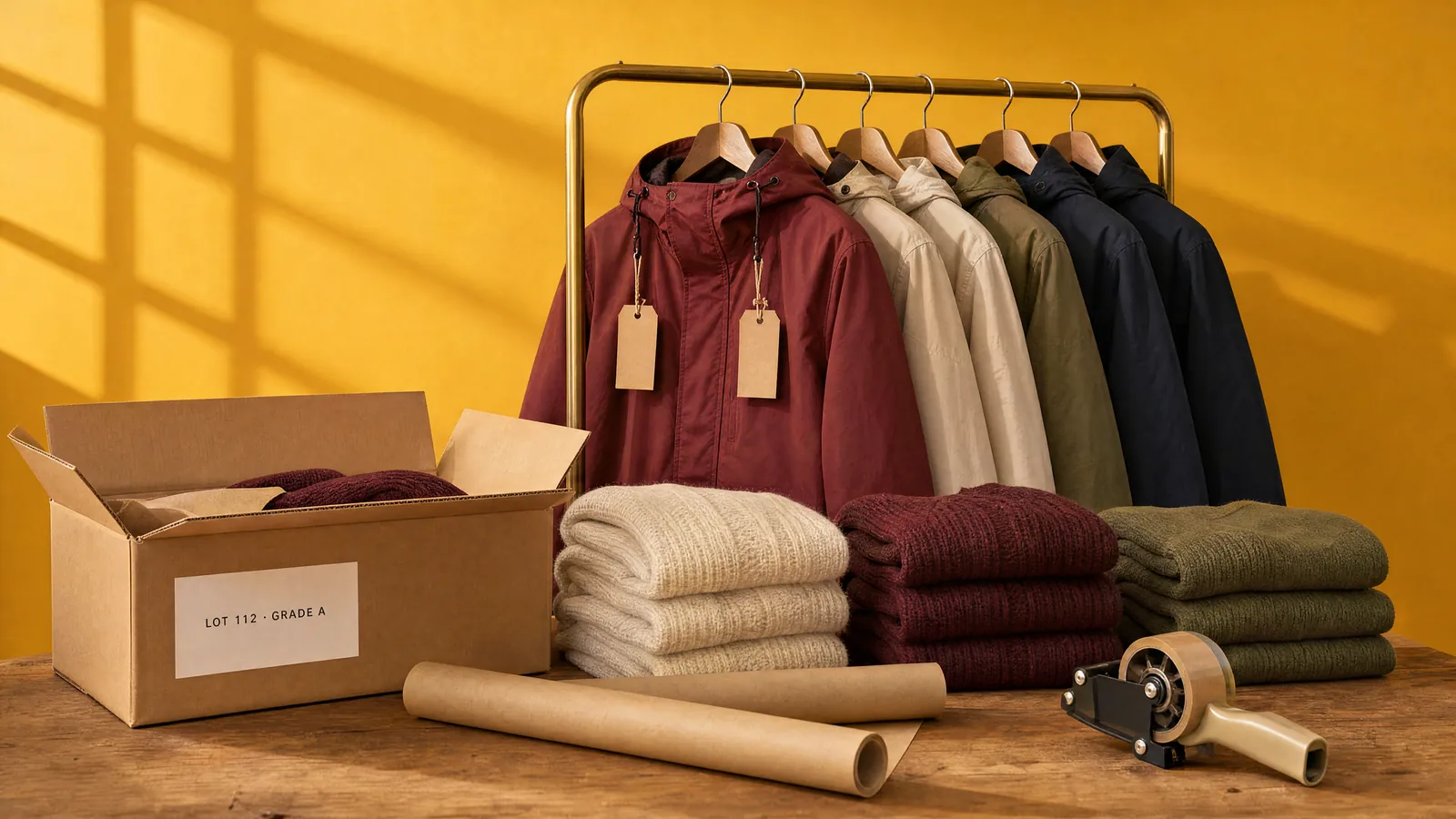
The EU's Ecodesign for Sustainable Products Regulation bans large companies from destroying unsold apparel, clothing accessories and footwear from 19 July 2026. Medium-sized companies follow on 19 July 2030; micro and small companies are outside the ban. Destruction includes recycling, energy recovery and disposal, and it stays allowed only in narrow cases such as unsafe, damaged or counterfeit goods, or stock that charities have refused. For genuine stock in good condition, that leaves selling, donating or preparing it for re-use. Selling it as a lot, to wholesale buyers in markets your own retailers do not reach, usually recovers the most money with the least damage to the brand.
What the rules say
The ban comes from the Ecodesign for Sustainable Products Regulation, Regulation (EU) 2024/1781, known as ESPR. Most of ESPR is about how products are designed. One part is about what happens to the products nobody bought, and for clothes and shoes it has now started to apply.
| Who | Destruction ban | Public disclosure of discarded stock |
|---|---|---|
| Large companies | From 19 July 2026 | Already applies, on a yearly basis |
| Medium-sized companies | From 19 July 2030 | From 19 July 2030 |
| Micro and small companies | Not covered | Not covered |
Who counts as large. The regulation uses the EU's definition of small and medium-sized enterprises (Commission Recommendation 2003/361/EC). A company is large if it employs 250 people or more, or if its annual turnover is above €50 million and its balance sheet total above €43 million. Below that it is medium-sized; small means fewer than 50 people and no more than €10 million of turnover or balance sheet; micro, fewer than 10 people and €2 million. The figures of partner and linked companies are added in, so a small label owned by a large group counts as large. Rules checked on 23 October 2026 against the regulation.
The products covered are listed in Annex VII of the regulation: apparel, clothing accessories and footwear. The European Commission has said it may add other products to the list later. National authorities enforce the ban, as the Commission's announcement of July 2026 explains.
Recycling counts as destruction
This is the part that surprises most brands. Under the regulation, destroying a product means damaging it on purpose or discarding it as waste. Recycling, energy recovery and disposal are all waste operations, so all three count as destruction, as lawyers reading the final texts have pointed out. Sending a season's unsold jackets to a textile recycler is no longer a way around the ban.
The one exception in the definition is discarding goods only so that they can be prepared for re-use, for example refurbished or remanufactured.
When destruction is still allowed
A delegated regulation adopted in February 2026, Regulation (EU) 2026/296, which applies from 12 May 2026, lists the cases where destruction remains possible. The main ones:
- Safety. The product is dangerous under the EU's General Product Safety Regulation.
- Non-compliance. The product breaks other rules and destruction is legally required or the right corrective action.
- Damage. The product is damaged, deteriorated or contaminated, or unfit for hygiene reasons, and repair costs more than it is worth or is not possible.
- Intellectual property. The product infringes intellectual property rights, a licence has expired, or protected labels, logos or designs cannot be removed.
- Donation refused. The product was offered to at least three suitable social economy organisations in the EU and none accepted it, or it was offered for donation on the company's website for at least eight weeks without a taker.
Even then, a company has to document its reasons, give them to the waste operator and keep them for five years. In practice, genuine, new stock in good condition will not fit any of these cases.
The disclosure duty
Large companies that discard unsold consumer products, or have them discarded on their behalf, must also publish every year, on their website, the number and weight of products discarded, by type, with the reasons and what they are doing to prevent it. An implementing regulation, Regulation (EU) 2026/2, sets a standard table for those reports, which becomes mandatory in 2027.
The disclosure is public. A brand that discards a lot of stock will have to say so, in numbers, in a format regulators and journalists can compare year on year.
Your options for unsold stock
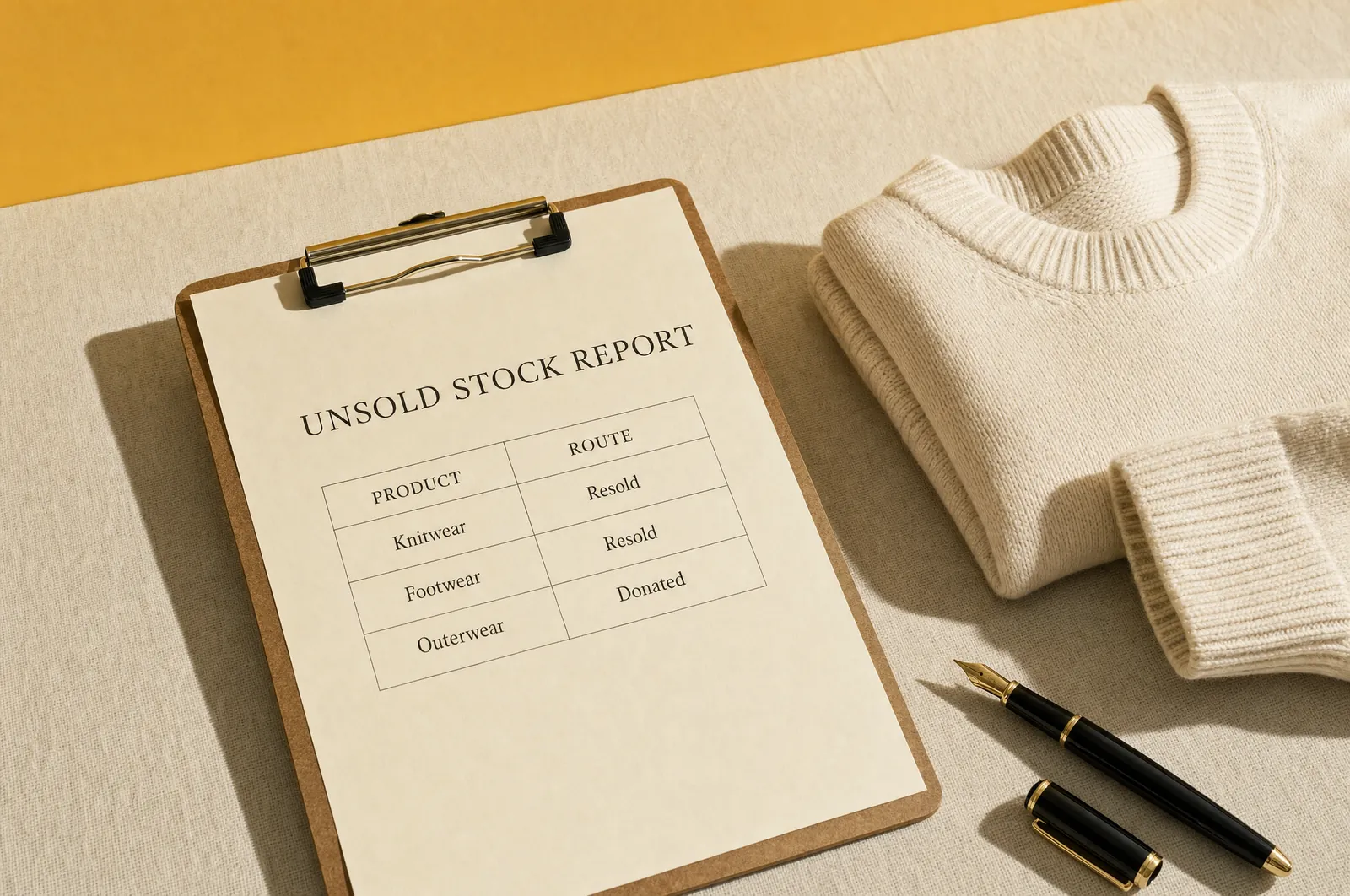
If destruction is off the table, every unit of unsold stock has to go somewhere. These are the routes, roughly in the order brands reach for them:
| Route | Money back | Speed | Risk to the brand |
|---|---|---|---|
| Your own outlets and sales | Highest per unit | Slow, limited by footfall | Low, but trains customers to wait |
| Off-price retailers and discounters at home | Medium | Medium | High: your stock reappears near your full-price stores |
| Wholesale lots for export markets | Medium | Fast: whole lots move at once | Low if the markets and channels are chosen |
| Donation | None, though there may be tax relief | Medium | Low |
| Preparing for re-use, reworking, debranding | Low | Slow | Low |
Most brands will use several. For the bulk of a season's surplus, though, the wholesale lot is the route that clears volume quickly while keeping the price out of sight of your own retailers.
Selling excess stock without hurting the brand
The fear that keeps stock in warehouses is a simple one: that a pallet sold cheaply turns up next to the full-price range, and the next season gets harder to sell. That fear is fair, and it is manageable. What protects a brand is control over where the stock goes:
- Choose the markets. Sell into countries your retail network does not serve. Buyers in the Middle East, Turkey and North Africa take branded stock from the UK and the EU and resell it through their own shops and wholesale chains.
- Close the channels you care about. Write into the contract where the goods may not be resold, for example back into the EU, on online marketplaces, or to named retailers.
- Set a floor price per lot and do not go below it.
- Stay anonymous if you want to. Sell through a counterparty that buys from you and sells to the buyer, so the buyer never learns who the stock came from.
- Keep the records. Invoices, packing lists and transport documents show that a lot was sold, not discarded, which is exactly what you will want to show when you report.
How Straiit helps
Straiit is a marketplace for branded excess stock. You list the stock, set the floor price and choose the markets; we match it to verified buyers, take their payment upfront or into escrow, have the goods inspected and keep the paperwork moving. Your name stays private: buyers see the stock, never the brand owner. There are no listing fees, and the fee is shown before you commit.
List your inventory, or read why so many cross-border stock deals fall through and how we keep them alive.
Questions we hear
Does the EU ban on destroying unsold clothes apply to small brands?
No. Micro and small companies are outside the ban. Medium-sized companies come under it on 19 July 2030, and large companies have been covered since 19 July 2026.
Can I still recycle unsold clothes?
Not as a way to clear unsold stock. Recycling counts as destruction under the regulation, so it is only possible in the cases the derogations allow, such as damaged or unsafe goods.
Which products does the ban cover?
Apparel, clothing accessories and footwear, as listed in Annex VII of Regulation (EU) 2024/1781. The Commission can add more product groups later.
This article explains the rules in plain words and is not legal advice. Check the texts linked above, or ask a lawyer, for your own situation.
Hasti Ebrahimighosour is the founder and CEO of Straiit. Since 2024 she has brokered branded stock between sellers in Europe and buyers across the Middle East. She built Veritariff, a trade compliance tool for tariffs, rules of origin and customs requirements, and studies law at UCL. More about Straiit