Why cross-border stock deals die in a month
A 2,000-pair shoe deal worth about £80,000 had a willing buyer, a willing seller and the stock in a warehouse. It died anyway. Here is the month that killed it, and what keeps the next one alive.

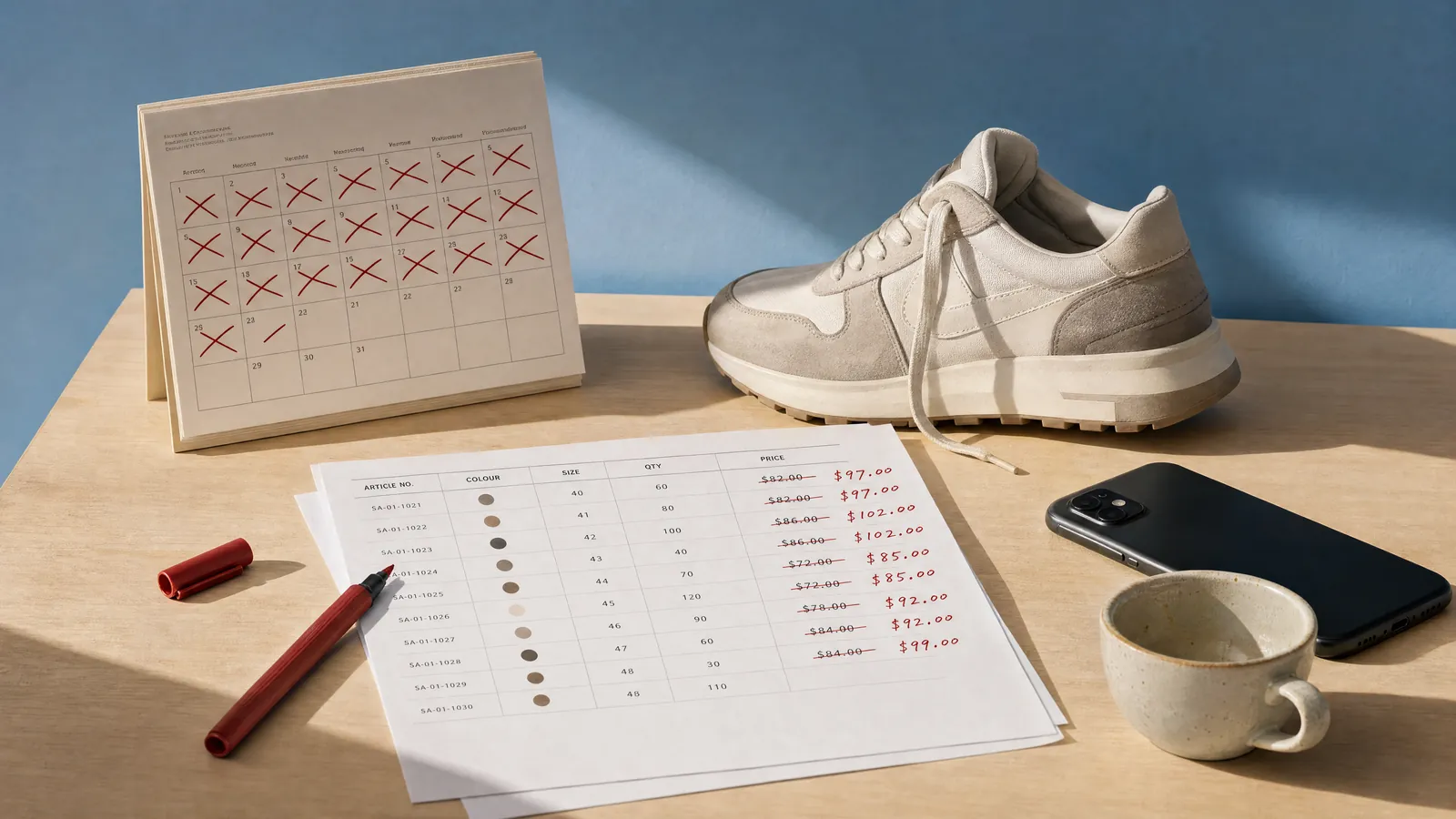
Cross-border stock deals rarely fail because someone cheats. They fail because they take too long. Every change to an order sends the seller back to a spreadsheet for days, nobody wants to pay or ship first, and while the messages go back and forth the currency moves, the stock sells elsewhere and the buyer's budget changes. Fix the price logic before you negotiate, agree who pays when before you talk details, and put one counterparty in the middle. The deal in numbers: 5,000 pairs asked for, 2,000 agreed, about £80,000, three price sheets and four weeks from the first request to the collapse.
The deal: 5,000 pairs, then 2,000
It started the way most of our deals start. A buyer asked for 5,000 pairs of a specific shoe. We did not hold that stock, so we went to a wholesaler we already knew and asked what they had.
The answer took a week. When it came, it was an Excel sheet of article numbers: no photos, no SKUs, no colour codes, no breakdown by size. The buyer ended up typing article numbers into a search engine one by one to find out what each shoe looked like. The sheet went back for colours and SKUs, and that took another two to three days.
With the detail in hand, the buyer did what buyers do and narrowed the order. 5,000 pairs became 2,000, and the price per pair went up, because a wholesaler's price is built on quantity and a smaller order sits on a higher step of the ladder. New sheet, a few more days. Then the size range changed from 37 to 45 to 40 to 45: a different slice of the stock, a third repriced sheet, another three to four days.
By the time the terms were agreed and it was time to write the commercial invoice, about a month had passed. Prices had risen with every change, the exchange rate had moved against the buyer, and he pulled out. We had lined up a second buyer for exactly this reason. During the same month, he had found the stock somewhere else.
Nobody acted in bad faith. The deal died of elapsed time.
| When | What happened | Waiting time |
|---|---|---|
| Week 1 | The buyer asks for 5,000 pairs. The wholesaler sends a sheet of article numbers, without photos or SKUs. | About a week |
| Week 2 | The sheet goes back for colours and SKUs. | Two to three days |
| Weeks 2 and 3 | The order drops to 2,000 pairs. The price per pair rises. New sheet. | A few days |
| Week 3 | Sizes narrow from 37 to 45 to 40 to 45. A third repriced sheet. | Three to four days |
| Week 4 | Terms are agreed. The currency has moved. The buyer walks, and the backup buyer has bought elsewhere. |
Why every change to the order costs days
A wholesaler's price is not one number. It is a list price and a ladder: the more you take and the less you pick, the lower the price per unit. Cherry-pick sizes, colours or styles and you move up the ladder. That is fair, and every buyer in the trade expects it.
The trouble is where the ladder lives. In most of this trade it lives in someone's head, or in a spreadsheet only that person understands. So every change to an order is a new quote, and a new quote is a person rebuilding a sheet when they find the time. In our experience three days per round trip is normal, and a week is not unusual. Three changes to an order can cost two weeks before anyone has talked about payment or freight.
The lists make it worse. Stock lists arrive as article numbers without photos, colours or a size breakdown, in a different format from every wholesaler: an email, a spreadsheet, a shared folder, a WhatsApp message. They are exported once and then go stale: the stock keeps moving after the file is sent, even when the file comes from the brand itself. A buyer cannot commit to a code, so every list sets off a round of questions before anyone can talk price.
Why nobody wants to go first in a cross-border stock deal
Under the timing problem sits a trust problem. A supplier who has never worked with you wants to be paid before the goods leave. A buyer who has never worked with you wants to see the goods before paying. Both are being reasonable, and the market is full of stories that prove them right: stock that did not match the photos, goods that never shipped, counterfeits sold as the real thing.
The workaround we have used most often goes like this:
- The buyer pays a deposit.
- The supplier ships and hands over the bill of lading.
- The buyer pays the balance once they hold the bill of lading and a certificate from an independent inspector.
- The goods wait in a warehouse at the destination and are released only when the money is in full.
It works, but it is slow, it has to be negotiated from scratch with every new counterparty, and each side is exposed at a different moment: the buyer between the deposit and the inspection, the supplier between shipping and the balance. Banks offer a cleaner answer in the letter of credit, under the International Chamber of Commerce's UCP 600 rules, but it needs a bank on each side willing to do it, documents that match to the letter, and time. In our experience, few of the traders who buy excess stock have one ready for a deal of a few tens of thousands.
Five strangers in every deal
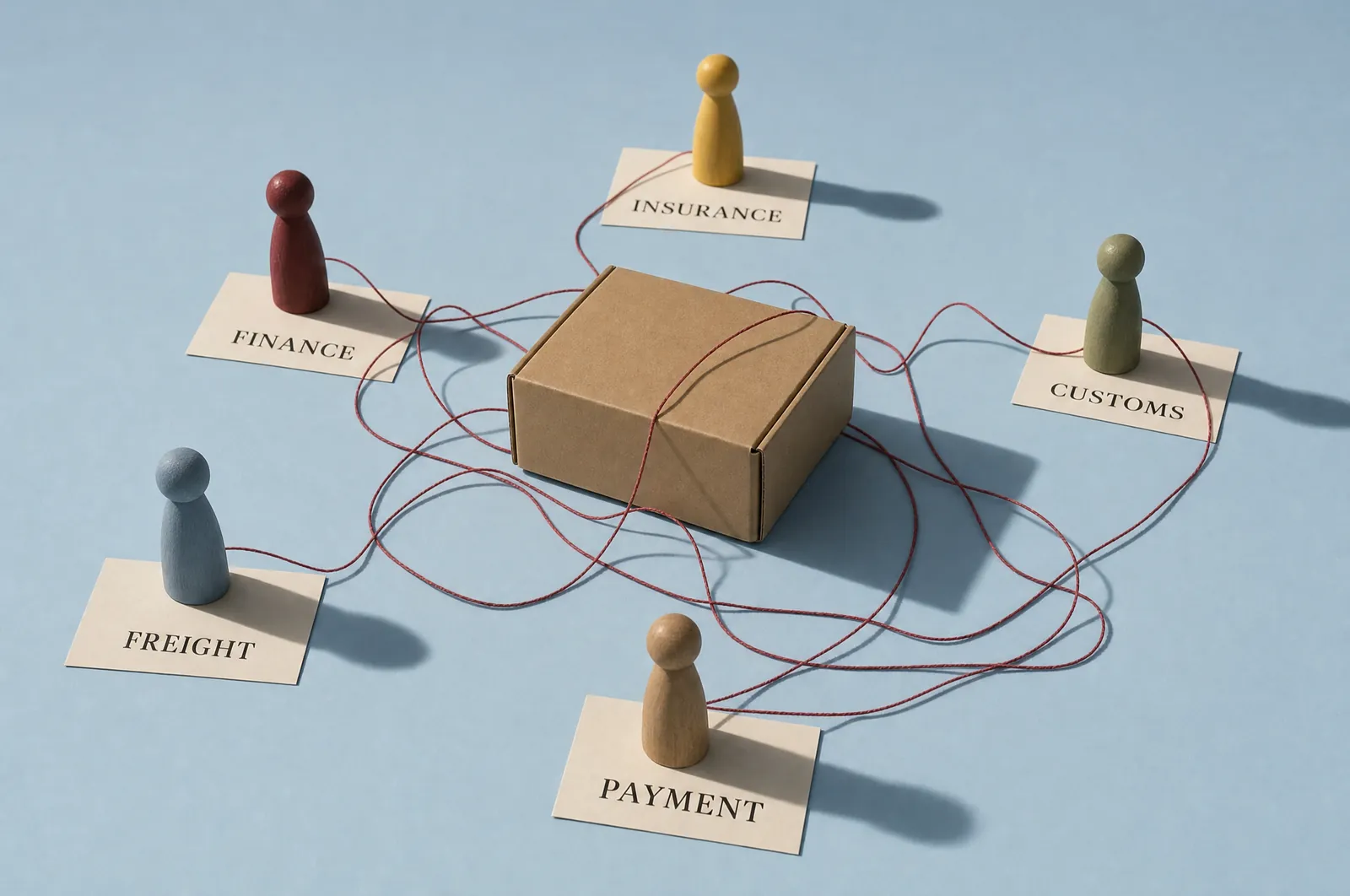
Even when the buyer and the seller agree on everything, a cross-border deal needs more people. Someone to finance it. Someone to insure the goods. A customs broker on at least one side of the border. A forwarder to move it. A bank or a payment provider to carry the money. Usually an inspector too. Each is a separate stranger with their own forms and their own timetable, and each is a place where the deal can stall.
Small gaps upstream become delays downstream. On another of our deals, the supplier's packing list had no HS codes, the customs classification of each product. The forwarder's customs broker had to work them out line by line before the goods could move. Nobody had asked for them at the start, because nobody owned the paperwork.
What a month does to a cross-border stock deal
Excess stock is a time-sensitive product dressed up as a slow one. Three things move while a deal waits:
- The currency. Sellers price in euros or pounds, and buyers often pay from another currency. On a deal where the buyer's margin is a few percent, a few weeks of exchange-rate movement can wipe it out.
- The stock. Excess stock goes to whoever commits first. A lot quoted in week one may be half gone by week four, and the next quote covers different sizes.
- The buyer. A wholesaler buys for a season and a cash position. A month later, both may have changed.
Speed is not a nice extra in this trade. It is what decides whether the deal survives.
How to keep a cross-border stock deal alive
Most of what killed the shoe deal can be fixed before the first price is quoted. If you buy or sell excess stock across a border, this is the list we work from:
- Ask for the stock list at SKU level from the start: article number, colour, sizes and quantity per size, photos, and where the goods are stored.
- Agree the price logic before the selection: the price ladder by quantity, and what picking sizes or colours costs. Then narrowing an order is arithmetic, not a new quote.
- Fix the currency of the deal and how long the offer holds, in writing.
- Settle the payment structure first (deposit and balance, escrow or a letter of credit), before anyone negotiates the details.
- Book the inspection early, against the agreed list and quantities.
- Make sure the packing list carries HS codes, weights and carton dimensions, so the forwarder can quote and the broker can clear without another round trip.
- Keep more than one buyer in view, and tell the seller your timeline.
How we run deals now
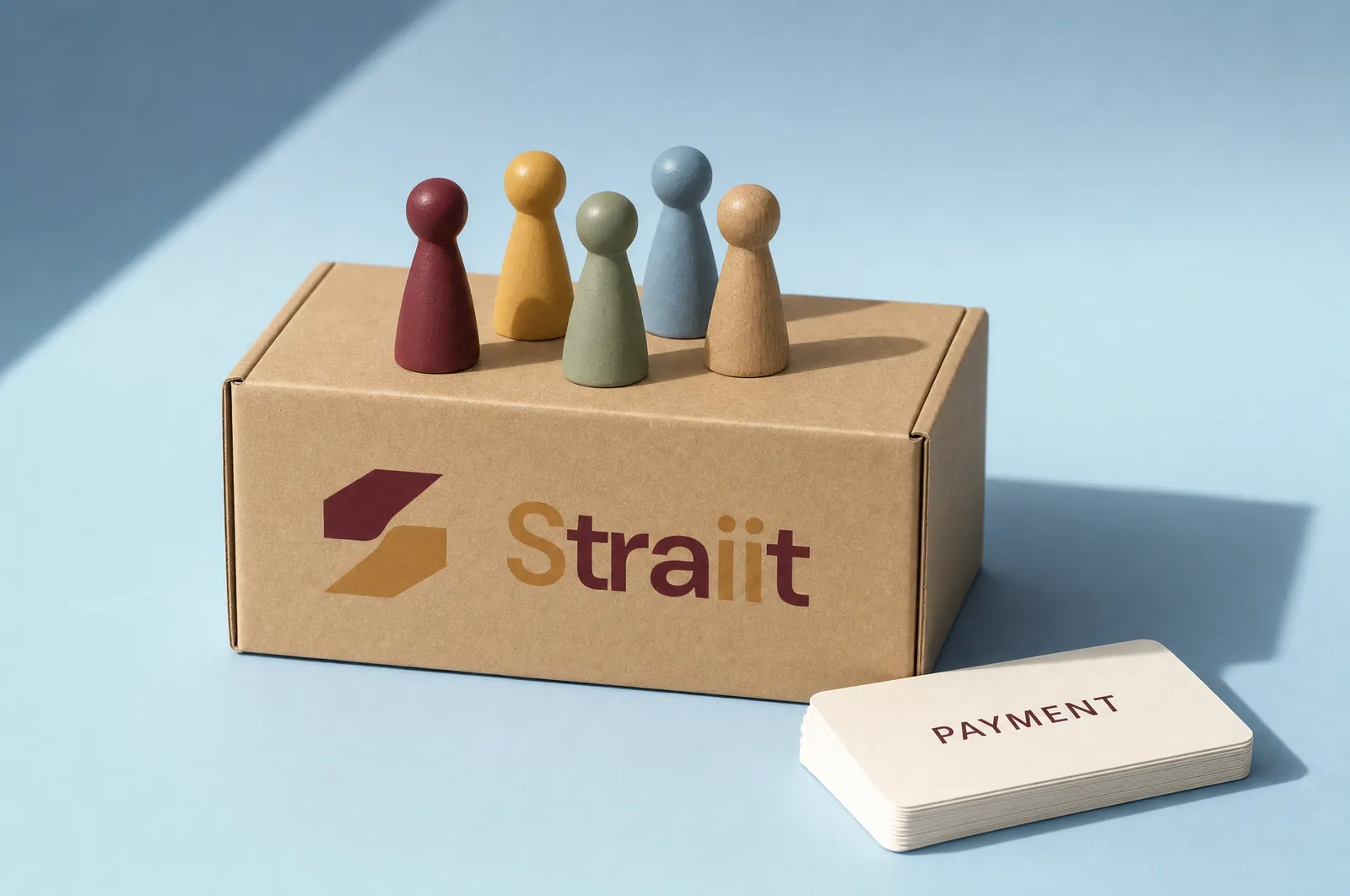
Straiit exists because of deals like this one. Instead of five strangers, you deal with one company. We verify both sides, take payment upfront or hold it in escrow with a regulated provider, have the goods inspected before any money is released, and keep the paperwork moving. Sellers set their floor price and stay anonymous; buyers see the stock, never the brand owner's name. Nobody has to trust a stranger on faith, and nobody has to go first.
If you have stock that keeps stalling in negotiations, list it with us. If you are a buyer tired of waiting a week for a quote, tell us what you need.
Questions we hear
How long does a cross-border wholesale deal take?
Between people who already trust each other, a week can be enough. With a new counterparty, a month is common in our experience, and most of it is spent waiting for quotes and agreeing who pays first, not moving goods.
Who pays first in an international stock deal?
With a new partner, usually nobody wants to. The common compromises are a deposit with the balance against the bill of lading and an inspection certificate, a letter of credit, or escrow, where a regulated third party holds the buyer's money until the goods are checked and shipped.
Why does the price per unit go up when I order less?
Wholesale prices for excess stock run on a quantity ladder. Taking the whole lot earns the lowest price; taking fewer units, or picking specific sizes and colours, leaves the seller with the harder-to-sell remainder, so the price per unit rises.
Hasti Ebrahimighosour is the founder and CEO of Straiit. Since 2024 she has brokered branded stock between sellers in Europe and buyers across the Middle East. She built Veritariff, a trade compliance tool for tariffs, rules of origin and customs requirements, and studies law at UCL. More about Straiit