Excess stock buyers: who buys surplus branded stock, and how
Every seller with a warehouse of last season's goods asks the same three things: who will take it, how quickly, and where it will turn up next. Here are the four kinds of excess stock buyers, compared on what matters to a seller, with what we have learned selling European branded stock to buyers in the Middle East.


Excess stock buyers come in four kinds: stock clearance companies, which take whole lots quickly; job lot traders, who buy by the pallet; off-price retailers such as TJX, the group behind TK Maxx, which buys from about 21,000 vendors for its own stores; and export wholesalers in the Gulf, Iraq and the Levant, who take larger lots to markets where the brand does not sell. They differ most in how they pay and where your stock reappears.
Who buys excess stock?
Excess stock is new, unsold goods that a brand or retailer holds beyond what it can sell at full price: overproduction, cancelled orders, last season's lines. Four kinds of excess stock buyers take it off a seller's hands: stock clearance companies, job lot traders, off-price retailers and export wholesale buyers. Where European branded lots come from, and what they contain, is set out in what European stock lots are.
The volumes are large. An estimated 4 to 9 percent of all textile products put on the market in Europe are destroyed before use, between 264,000 and 594,000 tonnes in 2020, according to the European Environment Agency. That exit is closing. Since 19 July 2026, large companies may no longer destroy unsold apparel, clothing accessories and footwear in the EU, and medium-sized companies are expected to follow in July 2030, as the European Commission announced. The rule sits in Regulation (EU) 2024/1781, and we go through it in the EU ban on destroying unsold clothes. Stock that cannot be destroyed has to be sold, donated or prepared for re-use, so the choice of buyer matters more than it used to.
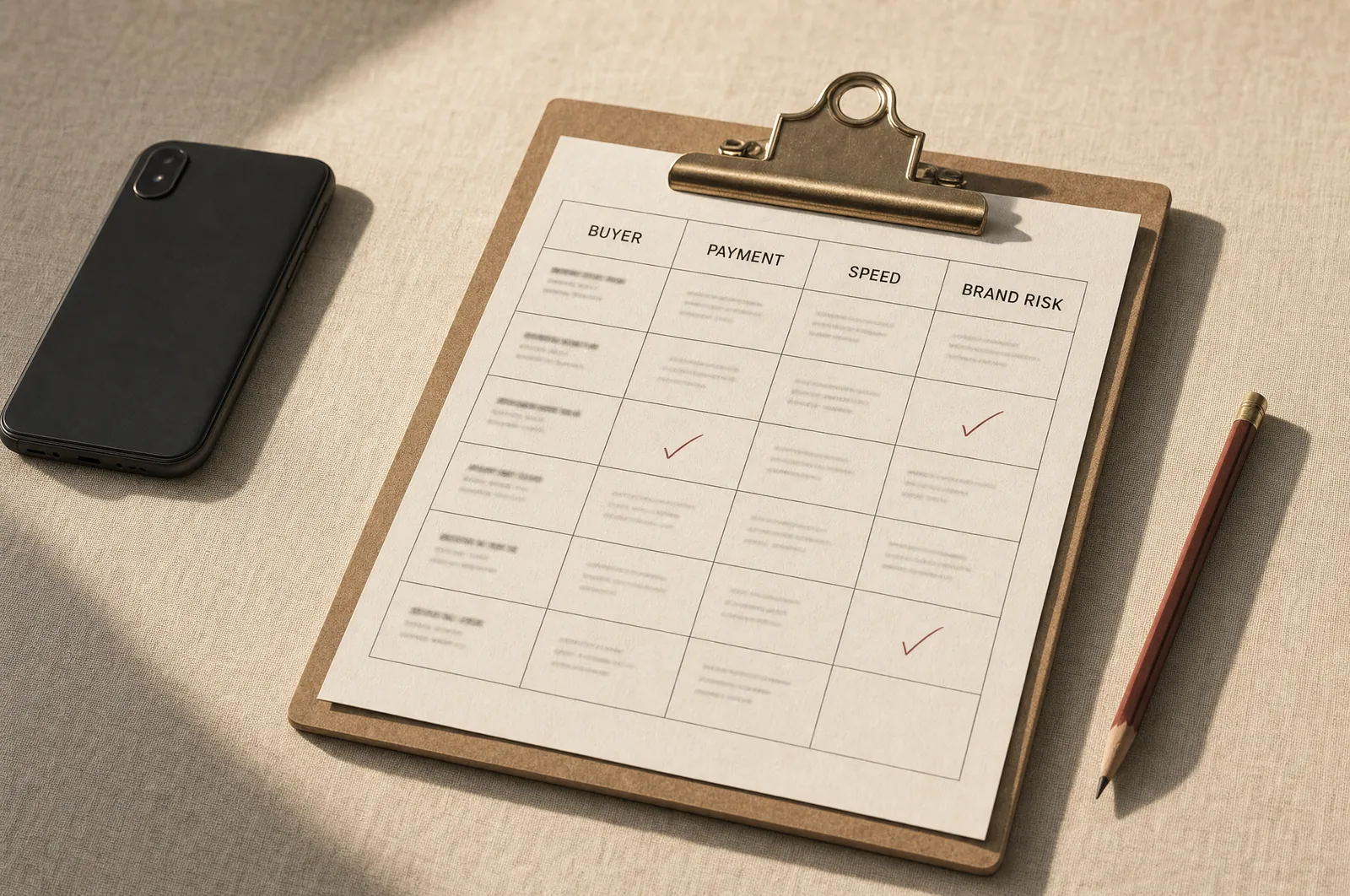
The four kinds of buyer differ on the four things a seller cares about: how they pay, how fast they move, how much of the lot they take, and where the goods end up.
| Buyer | How they pay | Speed | Share of the lot | Where the stock ends up (brand risk) |
|---|---|---|---|---|
| Stock clearance company | One price for the lot; on auction platforms, once the buyer confirms the goods match | Fast | Usually all of it, including what nobody else wants | Discount shops and other traders, often in your home market |
| Job lot trader | Small amounts per pallet or carton | Fast for small lots, slow for a whole season | A pallet or a few cartons each | eBay, markets and social media, mostly in the country where the stock sits |
| Off-price retailer | On the retailer's own purchase terms | Depends on fit with the current season | The styles and sizes that fit its stores | Its own stores, possibly near your full-price shops |
| Export wholesale buyer | Deposit and balance, letter of credit or escrow | Weeks for a first deal, faster once trust exists | Pallets to containers, often a whole lot | Markets your European retailers do not serve |
The table is our reading of the trade, from the deals and the buyer research behind Straiit, not a survey; individual buyers vary.
What do stock clearance companies pay for?
Stock clearance companies pay for volume and speed: they buy whole lots quickly, including the sizes and styles nobody else wanted, and resell them through their own discount shops or to other traders. In France they are called soldeurs and déstockeurs; in the UK, clearance or liquidation buyers. Their price reflects the job they take on, which is to carry the whole lot and the risk of selling every last piece of it.
Some buy directly from brands and distributors. Noz, a French chain of clearance stores with "350 magasins" in France, describes its model on its website as buying "lots issus de faillites ou de surstocks, de fabricants ou distributeurs": lots from bankruptcies or overstock, from manufacturers or distributors.
Others are reached through online auctions. Stocklear, a French B2B marketplace for clearance stock, runs online auctions of customer returns, overstock and damaged goods, and its home page claims more than 12,500 qualified professional buyers, from discount stores and second-hand shops to wholesalers; it names Boulanger, Carrefour and Fnac Darty among its recent sellers. Its page for sellers sets out how a sale runs: the seller approves the highest bidder at the end, the buyer collects the goods from the seller's premises at its own cost, and the seller is paid once the buyer has confirmed the order matches. B-Stock, another auction route, lists "auctions from 50+ marketplaces" of returned, overstock and liquidation inventory for resellers, according to its blog.
The trade-off is control. Once a clearance buyer owns the goods, it sells them wherever it can, which is often the seller's own market. Stocklear lets sellers restrict the visibility of a sale by country; in our reading that filters who can bid, not where the goods are resold afterwards.
Who are job lot traders?
Job lot traders are small resellers who buy mixed lots by the pallet or the carton and sell them on piece by piece, on eBay, at markets and through social media. "Job lot" is the usual UK term for goods sold together at one price. Job lot traders are numerous and quick to buy when the price is right, but each one takes little.
Their meeting places are public. When we counted on 18 September 2026, the largest public UK Facebook group for the trade, "job lots, clearance items uk only", had 36,259 members, and its rules make sellers state the quantity in every post. In our buyer research this crowd buys a pallet or less at a time, which is too small for a container lot.
Job lot traders suit a few pallets of mixed sizes and styles, sold in the country where the stock already sits. For a full season of one brand they are slow: the lot has to be split into dozens of small sales, each with its own buyer, payment and collection.
How do off-price retailers buy?
Off-price retailers buy branded stock opportunistically for their own stores, choosing the styles, sizes and quantities that fit what they sell, and they keep buying through the year instead of ordering seasons ahead. TJX, the US group that runs TK Maxx and Homesense in Europe, lists its sources in its annual report for fiscal 2026: "closeouts from brands, manufacturers and other retailers", special production, and "order cancellations and manufacturer overruns". It works with "approximately 21,000 vendors across the globe", buys from more than 100 countries through a buying organisation of over 1,400 people, and says it buys much of its merchandise "for the current or immediately upcoming selling season". Its stores sell at prices it describes as "generally 20% to 60% below full-price retailers'" regular prices.
For a seller, an off-price retailer is selective. It takes what fits its stores now, not the whole lot, and leaves the rest with you. The brand risk is where the goods end up: according to the same filing, TK Maxx operates in the UK, Ireland, Germany, Poland, Austria and the Netherlands, so a brand that sells in those countries can find its own stock on a discount rail near its full-price stores. Whether that is acceptable is a decision only the brand can make.
Who are export buyers in the Middle East?
Export buyers in the Middle East are importer-wholesalers in Dubai, Baghdad, Erbil, Amman and Istanbul who buy European branded stock by the pallet or the container and resell it through their own shops and wholesale networks, in markets where the brand's European retailers do not sell. In our experience they are the excess stock buyers most likely to take a whole lot of one brand, and the ones furthest from the seller's home market.
The trade is easy to see. The public business directory dcciinfo.com listed more than 3,300 ready-made garment trading companies in the UAE on 24 October 2026. In Iraq, when we counted on 18 September 2026, the largest public Facebook group for clothing wholesale offices, distributors and factories had 495,521 members, and the group for Baghdad's Shorja wholesale market had 386,617.
Export buyers pay in one of three ways: a deposit and a balance; a letter of credit, in which the buyer's bank pays against documents under the ICC's UCP 600 rules on documentary credits; or escrow, in which a third party holds the money until agreed conditions are met. The US International Trade Administration notes on its page on methods of payment that "escrow services are becoming another cash-in-advance option for small export transactions". In our deals so far no escrow has been used: a new buyer pays a deposit, the seller ships, and the buyer pays the balance once it holds the bill of lading and a third-party inspection certificate, while the goods are held at destination until the money clears. We explain how escrow protects the seller step by step.
Both sides ask questions before they commit. In our deals, European wholesalers have asked a new buyer for its company registration, the countries where it will sell, and its agreement to exclusions; a common one is "not reselling in the EU". Buyers, in turn, want the SKU, the colour and the quantity per size for every line, with photos of the real stock. A list of bare article numbers sends the buyer off to search each one online, and every day spent that way is a day the deal can die.
Which buyer fits which lot?
The right buyer for a lot depends on three things: its size, its condition, and how much the brand cares where it reappears. These rules of thumb are our opinion, not data:
| Your lot | Buyer to approach first | Why |
|---|---|---|
| A few pallets of mixed styles, in the UK or the EU | Job lot traders or a clearance auction platform | Small lots sell quickly close to where they sit |
| A whole season in mixed condition, needed out this month | A stock clearance company | One buyer takes everything, including what nobody else wants |
| Current styles in good size runs, and a brand relaxed about discounts at home | Off-price retailers | They pay for what fits their stores right now |
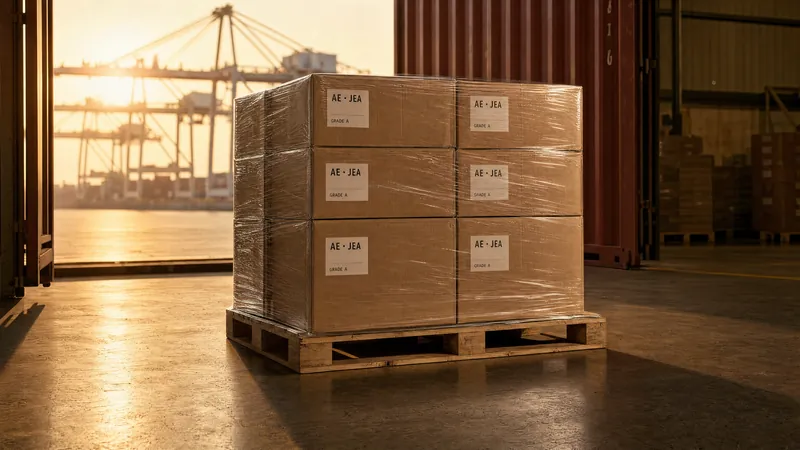
| Grade A stock (new, with original tags and packaging) and a European price to protect | Export buyers in the Middle East | Whole lots go to markets your retailers do not serve |
Whichever buyer you choose, line up more than one. In one of our deals a buyer asked for 5,000 pairs of one shoe, then cut the order to 2,000 pairs and the size range from 37 to 45 down to 40 to 45. Each change sent the seller back to reprice, each new price took days, and after about a month the buyer walked away because the currency had moved against him. We had lined up two buyers for that stock. One had found the same stock elsewhere during the month of back and forth; the other could no longer afford it after the repricing. Two buyers were not enough.
The lesson for a seller is to make every answer fast. Send a complete list from the start, with the SKU, colour and quantity per size and photos of the real stock, and set the price for the whole lot and for parts of it before the first buyer asks. A buyer who waits days for a price finds other stock.
How Straiit finds buyers for your stock
Straiit is a marketplace for branded excess stock built for the Middle East: sellers in Europe list their surplus, and verified buyers in the Gulf, Iraq, the Levant and Turkey buy it. We verify both sides, take the buyer's payment upfront or into escrow held by a regulated provider, have the goods inspected by a third party before the seller is paid, and keep the paperwork moving. Sellers stay anonymous: buyers see the stock, never the brand owner's name. There are no listing fees, and Straiit's fee is shown once your account is verified.
We are not open yet. If you have branded stock to place, join the seller waitlist.
Questions we hear
Who buys excess stock in the UK?
Off-price chains such as TK Maxx, stock clearance companies, job lot traders, and the importers and wholesalers that HMRC names for free by commodity code on its trader search. When we queried that data on 24 October 2026, 1,181 businesses had imported footwear with leather uppers (heading 6403) in August 2026 alone, and Companies House listed 17,286 active companies in the wholesale of clothing and footwear (SIC 46420).
Do excess stock buyers pay upfront?
Not always. On auction platforms such as Stocklear the seller is paid once the buyer has confirmed the order matches; in our deals with export buyers, a new buyer pays a deposit, then the balance against the bill of lading and an inspection certificate. Escrow with a regulated provider commits the buyer's money before the goods move, without paying the seller before the conditions are met.
Can I stop buyers reselling my stock in Europe?
You can make it a condition of sale: a clause naming the countries where the buyer may resell, and a declaration of the final destination. In our deals, European wholesalers commonly ask buyers to accept "not reselling in the EU"; how far such a clause can be enforced depends on the law of the countries involved, so have a lawyer draft it.
Can a brand destroy unsold clothes instead of selling them?
Not a large company in the EU: since 19 July 2026, large companies may no longer destroy unsold apparel, clothing accessories or footwear, and medium-sized companies are expected to follow in July 2030. Selling, donating or preparing the stock for re-use are the routes left.
Which excess stock buyers take a whole lot?
In our experience, stock clearance companies and export wholesale buyers. Clearance companies usually sell the goods in or near your home market; export buyers in the Middle East take them to markets where your European retailers do not sell.
Hasti Ebrahimighosour is the founder and CEO of Straiit. Since 2024 she has brokered branded stock between sellers in Europe and buyers across the Middle East. She built Veritariff, a trade compliance tool for tariffs, rules of origin and customs requirements, and studies law at UCL. More about Straiit